

Big Boys Do Cry
The Three Times My Brother Cried

Hi friends! Today I’m serving you a guest piece written by the wonderful Ahmad Saber! If you’d like to submit to write a guest piece, you can do so here!
This week’s episode of Getting Close, with John Paul Brammer is one of my faves, we talk about why you feel lonely in groups and how to solve it with the three lessons that make him happier! Listen now!
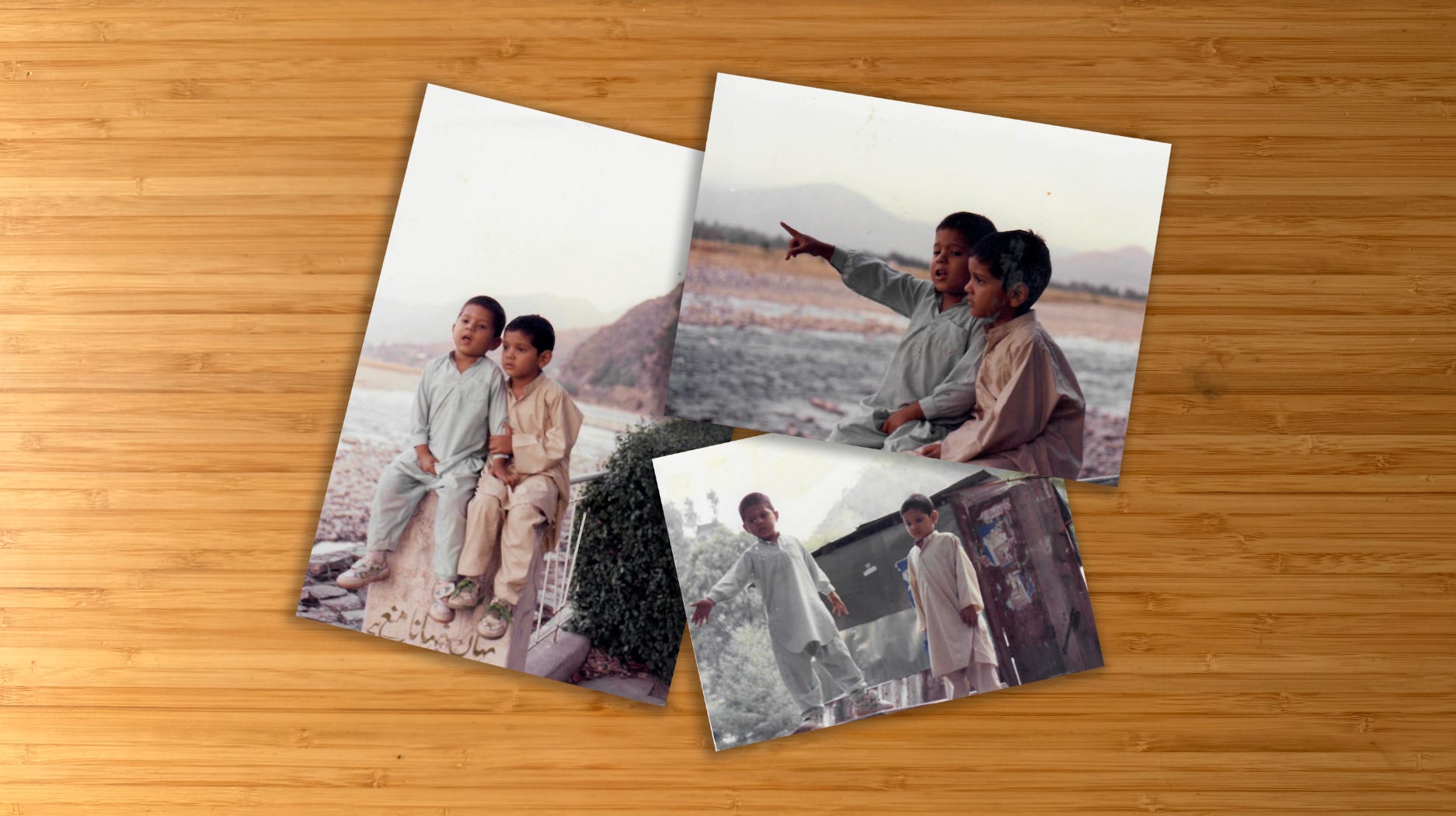
The earliest memory I have of my little brother is him crying on my first day of school. Mom had enrolled me in kindergarten when I was five. It was a sad and depressing place on a sad and depressing road in Peshawar, Pakistan. You can guess exactly how sad by the fact that they made kindergarteners wear full uniforms: striped ties, black shoes polished to a blinding glisten, button-down white dress shirts neatly tucked into khaki pants. I was all dressed up for the first day, while my little brother was still in his PJs. As soon as the screened door creaked shut behind me and Mom, he started bawling. He’s only a couple years younger, must’ve been three at the time. Later that day, he told me the reason he cried: “I also wanted to look like a policeman!”
Then came a prolonged, tear-free period. I just don’t remember him ever crying, no matter how bad it got. Failed a test at school and got scolded by Mom? No tears. Got caught pushing a parked school bus that eventually rammed into a wall and caused property damage? Not a single tear. Nearly fell off a tree while trying to catch a kite against Mom’s strict orders not to climb high things? No crying. Maybe someone told him boys aren’t supposed to cry? I’m not sure.
What was sure was how deeply the two of us would bond as siblings. We grew up on an all-girls college campus. Other than exploring “haunted” corners of the campus, cricket and video games became our things. Kite-hunting was also especially important to us. One day after school, when my brother was being held hostage by Mom for exam prep, he caught a glimpse of this gorgeous purple-and-pink stray kite in the sky, giddily gliding down from the clouds. Stray kites were fallen soldiers in kite battles and were anyone’s to claim if caught first. Our fiercest competitors were other kids on the campus. It was a hot summer day, and I was in my undies. Undies were definitely not something I’d wear outside the house, especially not in front of the other kids who’d make sure I die of embarrassment. But this was a time-sensitive matter. If I didn’t make it to the kite first, someone else would. My baby brother pleaded with me to go catch it for him, or at least just try. I didn’t know this at the time, but I was a queer kid, not the kind who could wrestle it out with the other, more masculine kids to win a kite. But I had the wits and the will. I zipped out of the house and ran faster than I ever had before. Sure enough, there was a crowd of other kids chasing the same kite as it drifted closer and closer to the ground. With some quick thinking, I traced the kite’s string to a rooftop of a building, scaled up a wall as if I’d been a lizard in a previous life, and voila: I won it! My brother had the biggest grin on his face when I returned. He couldn’t believe it. Neither could I.
Fast forward to November 2006, we were now teenagers and on a Qatar Airways plane to a new country, a new life. Looking back, I find it so ironic that it was on this flight that my brother introduced me to someone called Madonna. He’d listened to the soundtrack on the in-flight entertainment system and fell in love with “Hung Up.” The rest would become history. Once in Canada, I slowly began to come to terms with my sexuality and my undeniable queerness, yet I felt that it was something I must keep hidden.
Eventually, I came out to my closest friends and family after a summer internship in Heidelberg, Germany. I was around twenty-two at the time and came out to my immediate family members one by one. This is the second time I ever remember my brother crying. I had just spoken the words “I’m gay” when he burst into tears. I guess he just never saw it coming (even though I was the only one of us three boys to demand Barbies for my birthdays). He told me, “I just don’t want you to suffer in the afterlife.” I am not sure what I was expecting him to say, but it wasn’t this.
Following this, my brother and I settled into a place of confusion and a “don’t ask don’t tell” rhythm. While I wasn’t even fully out of myself yet, or didn’t know what pride felt like, I had no idea my queerness would make him so uncomfortable. Still, I knew I couldn’t change his core beliefs. One day, he said to our sister, in my absence, “I love him so much that I won’t hesitate to give him my life.” And I fully believe him. But that doesn’t change the fact that there was (and still is) profound hurt and grief here, and I must accept a certain duality: love and hurt may have to co-exist in the same heart. It also made me reflect on how powerful queerness is and how sad it is that a lack of its understanding can threaten bonds as deep as the one my brother and I shared.
Anyway, I now had a choice to make: sit with the grief and wallow in it, or turn it into art. I chose the second option. My beautiful, complex, and imperfect relationship with my little brother inspired a character called Zayn in my debut YA novel, Ramin Abbas has MAJOR Questions. Zayn is the titular main character’s younger brother, has a samosa empire at the all-Muslim school he attends with Ramin, and is simultaneously full of both love and greed. Writing Zayn’s relationship into the novel ended up being so therapeutic to my own relationship with my brother. It brought me wish fulfillment, a fantasy version of what my own relationship would’ve looked like in a parallel universe.
The final time my brother ever cried was the day he got a new job offer from Scotland. This meant leaving Vancouver, the city we immigrated to as a family. Before he made the final call, he came to talk to me and to ask for my opinion. I told him, “If you must go, go. I want you to find excellence in your career. But your leaving will leave a hole in my heart. If you come back one day, please just don’t be surprised if I’ve filled it up.” As soon as I said that, I broke down and cried. It made him cry back. He hugged me tight and said, “If you say don’t go, then I won’t. I still have a job here. I can keep it.”
And all I could say back to him was, “Go.”
He knew it all too well: I love him, and I want nothing but happiness for him. And in spite of anything he believes about homosexuality and sin, I know he loves me too and wants nothing but happiness for me.
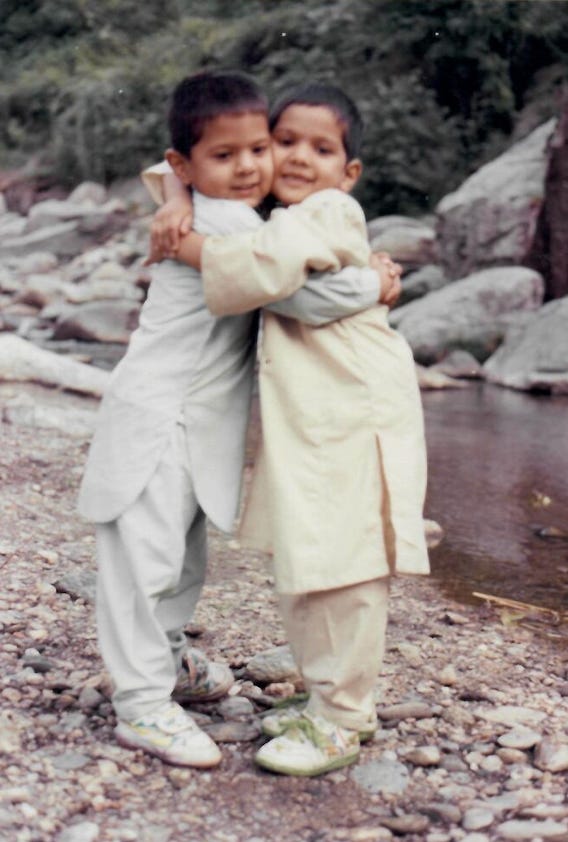
I have reflected a lot on my relationship with my brother as an adult. Of course, we all hope that a family member would accept and love us unconditionally in a moment as vulnerable as coming out, and to see all parts of ourselves, including the beautiful queer parts. However, looking back now, in spite of my brother’s ironclad convictions and beliefs about the afterlife and his fear of divine punishments, I realize his response came from a place of deep worry and concern rather than hate or bigotry. At the end of the day, I know there is love deep down, even if it’s hidden. I have had to accept things the way they are rather than endlessly wishing for them to change and suffer in the process.
I have also learned that having compassion for a different point of view can also help ease the suffering and allow for a path to healing. I sympathize with the fact that, like me, my little brother was indoctrinated with certain views as a child that can be very hard to unlearn or even re-interpret as an adult. Fear-based indoctrination at a young age can become a major obstacle to critical thinking. The way I see it, my brother is suffering from fear. And that is one heck of a suffering. I hope and pray he’d be rid of it one day.
To anyone reading who might’ve had a similar experience with a family member, I’ve personally confirmed what they say: the opposite of love is not hate, but fear. Unfortunately, sometimes love gets dimmed by a thick cloud of fear. All we can really do is hope for the clouds to disperse one day so that the love that’s always been there can reveal itself in full brightness.
Have you had a similar experience with a sibling or family member? What did you learn from it? How did you move through it, if you did at all?
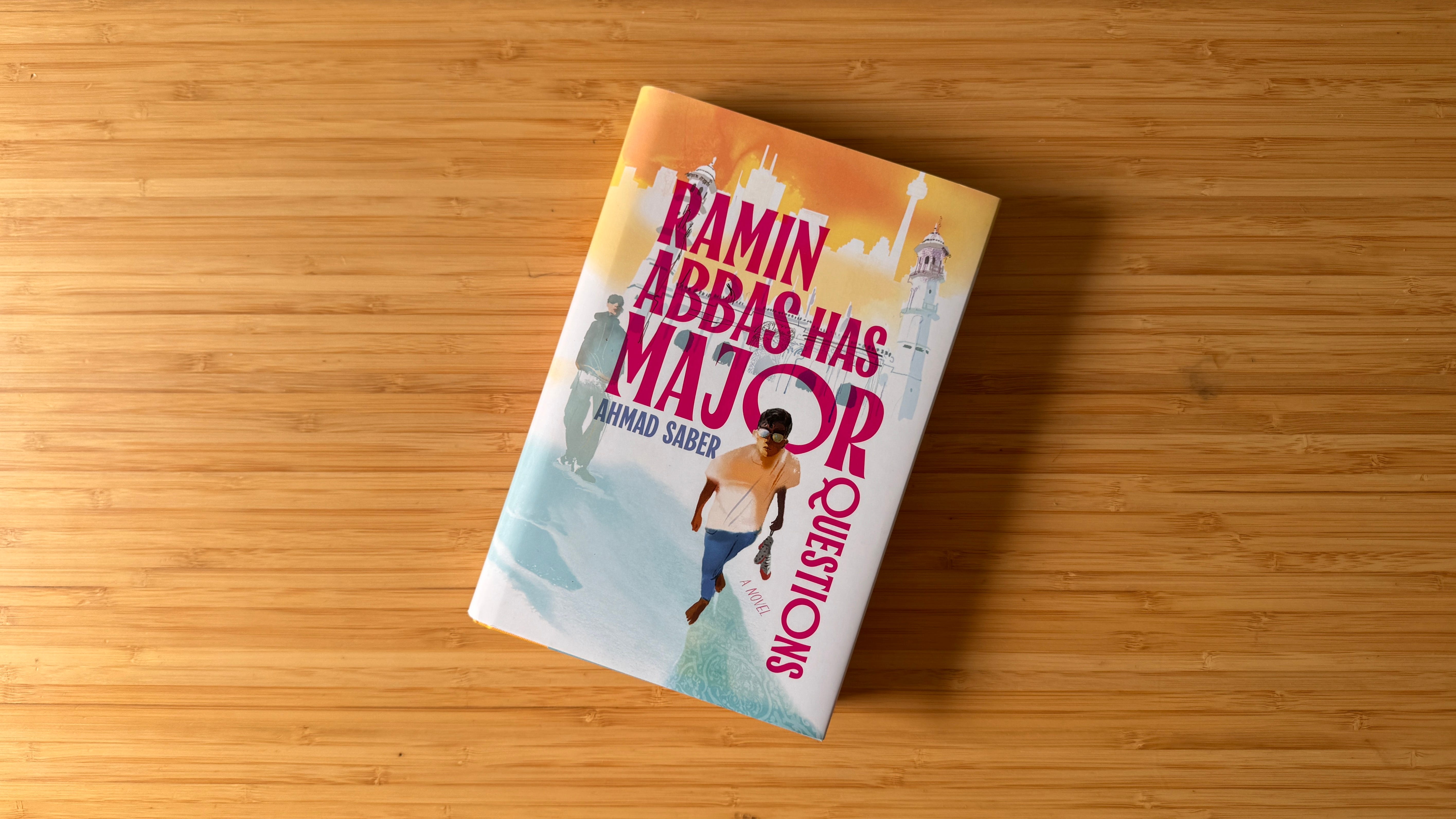
Check out Ahmad’s delightful debut novel, Ramin Abbas has Major Questions, wherever books are sold! It is such a wonderful read with so much heart, humor, and I cannot recommend it enough!

Thanks you for sharing. Some familiar feelings I experienced with my religious family members too - a feeling of fear coming from the belief in a higher power.
My father was a minister (Southern Baptist), and my mother has degree in theology. I did not say anything to my father before he died and said something only indirectly to my mother who is in her 90s. She is fat too old to alter her thinking, and do we stumble around my gayness in an attempt to leave our relationship unscarred.